Stick Welding (SMAW)
Shielded metal arc welding with coated stick electrode — the classic for construction sites and assembly
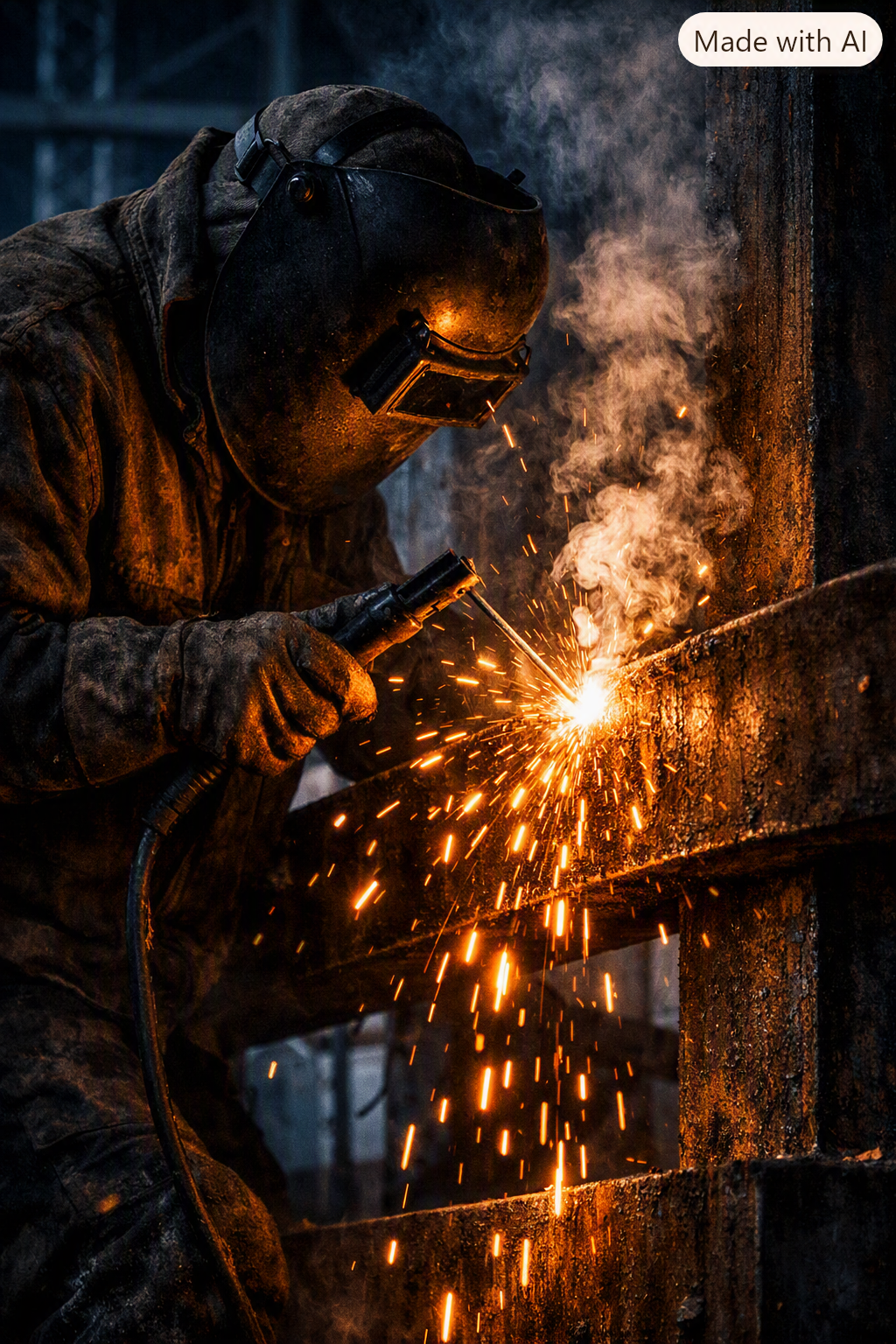 AI generated
In stick , the burns between a consumable stick electrode and the workpiece. The electrode coating forms and slag — so the process works even in wind and weather. The rugged all-rounder for assembly, construction sites, and repair.
SMAW (stick) — officially — is probably the most rugged process there is. The burns between a consumable and the workpiece. The electrode melts and becomes the weld itself.
The secret is in the : it burns during , creates a shielding gas, and forms a that covers the cooling weld. That's exactly why stick works outdoors in wind and weather — you don't need separate . That makes it the classic for construction sites, assembly, and repair.
The coating determines the properties — three types you need to know:
• : Low-hydrogen, tough welds with high impact toughness. The first choice for load-bearing components, thick plates, and low temperatures. Disadvantage: sensitive to moisture (electrodes must be re-dried!) and tougher slag.
• : Easy starting, low spatter, and the slag practically removes itself. The most user-friendly type for shop work and thin plates.
• : Deep penetration, high deposition rate — the classic for root passes on pipelines ("vertical down").
What the code on the electrode tells you
Every stick electrode carries a standard designation per DIN EN ISO 2560 — and it reads like an ID card. Using "E 42 5 B" as an example: The E stands for stick electrode, the 42 for the (420 MPa), the 5 for the minimum impact toughness at −30 °C (5 = 47 J), and the B for the basic coating. So you can see at a glance whether the electrode fits your workpiece — no data sheet needed.
Electrode diameter and current
Here too: thicker electrode = more current = more energy and deposition rate. Rough guidelines:
• 2.0 mm: approx. 50–90 A — thin sheets, light gauge.
• 2.5 mm: approx. 70–120 A — the standard in the trade.
• 3.2 mm: approx. 110–160 A — medium plates.
• 4.0 mm: approx. 140–200 A — thick plates, V-grooves.
• 5.0 mm: approx. 180–260 A — thick sections, fill passes.
Too much current spatters and burns through; too little and the electrode sticks. The rule of thumb "30–50 A per millimeter of electrode diameter" helps as a starting point.
Polarity
Basic and cellulose electrodes usually run on DC with the electrode positive (DC+); rutile electrodes run on AC or DC depending on type. The print on the electrode tells you the allowed polarity — stick to it, otherwise you get spatter and poor penetration.
Moisture is the silent killer
Basic electrodes absorb water from the air. During , this water breaks down in the into hydrogen — which migrates into the and makes it brittle: the classic . So: store basic electrodes dry and them if in doubt. A damp basic electrode is the most common cause of cracked welds in outdoor use.
The big advantage: simplicity and robustness. A welding machine, a cable, an electrode — that's all you need. No gas, no wire spool, no cooling. It welds in almost every and in almost any weather.
The disadvantages: it's slow (changing electrodes, removing slag), produces more spatter and fumes, and the slag must be thoroughly removed after each pass — otherwise you risk .
Typical applications: structural steel assembly, railings, repairs, root passes on pipelines, and anywhere conditions are rough and uncomfortable.