Plasma Welding
The constricted — high energy density for deep, narrow welds
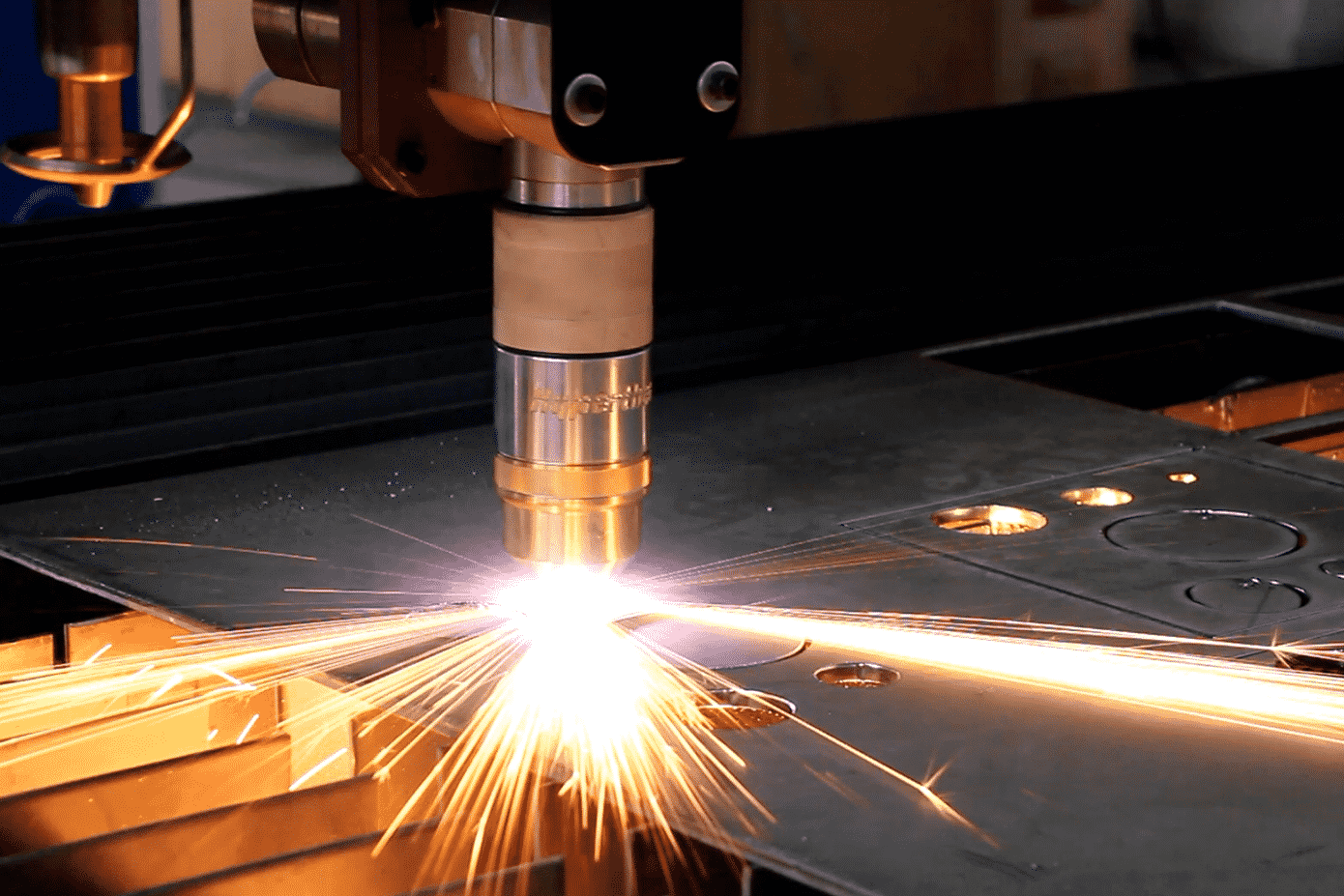 AI generated
In plasma , the is constricted by a narrow nozzle and focused into a hot plasma jet. The high energy density allows deep penetration, narrow beads, and minimal — for precision parts and high speeds.
Plasma is the fourth state of matter: a gas that has been heated and ionized so strongly that it becomes electrically conductive. In , you use exactly that: the burns between a and the workpiece, but is constricted by a water-cooled nozzle. The is forced to flow through a narrow opening — the broad TIG-like arc becomes a sharp, focused plasma jet with very high energy density.
What the constriction does physically
Imagine the like water from a hose. Without a nozzle, it spreads out wide; if you pinch the opening, a focused jet shoots out. With plasma, exactly that happens to the electrically conductive gas: the nozzle squeezes the together, the current density increases, and the temperature in the core of the jet reaches values far above those of a free . The difference from TIG is precisely this constriction — and it has three consequences:
• Deep penetration: The plasma jet melts deep and narrow — all the way to the keyhole that goes through the entire plate.
• Narrow : Because the heat is introduced in a concentrated way, the HAZ stays small — less distortion, less microstructural change.
• High speed: Thin sheets can be welded at high speed without filler.
Two gases, two tasks
With plasma, you work with two gases:
• (usually argon): It flows through the torch, is ionized, and forms the actual plasma jet.
• (argon or argon-helium): It surrounds the jet from the outside and protects the pool from oxidation.
Flow rate and mixture of both gases control penetration and bead shape — that's why plasma is more sensitive to parameters than TIG.
The pilot arc — the hidden stability trick
A small auxiliary arc burns continuously between the electrode and the nozzle — the pilot arc. It keeps the plasma alive even without workpiece contact. This makes the process extremely reliable to start and stable, especially during start and interruptions. For automated systems and clean starts, that's gold, because the main arc ignites immediately at any time.
The two operating modes:
• Microplasma (0.1–15 A): For ultra-thin sheets from 0.05 mm — precision like soldering, but a real weld joint. The is so stable that it doesn't break off at tiny currents.
• Keyhole plasma (over 100 A): The plasma jet pierces through the plate and closes again behind the torch — single-pass welds on plates up to 10 mm in one pass, completely without filler.
Plasma or TIG or laser?
The three overlap, but with a clear division of labor: TIG is the handy precision for individual production, plasma is the more powerful variant with deeper penetration and higher speed, laser is the even more extreme level for automated series. Rule of thumb: for the classic workshop, TIG is usually enough; plasma pays off when you need high energy density, deep penetration, and repeatability.
Applications are everywhere where precision and speed come together: pipelines, thin-walled stainless steel containers, medical technology parts, and automated series production.
The price: the system is more expensive and complex than TIG, parameter control is more demanding, and the nozzles wear out. In return, you get one of the most stable arcs there is.