Welding Fumes & Hazardous Substances
What rises from the weld and why extraction isn't a luxury
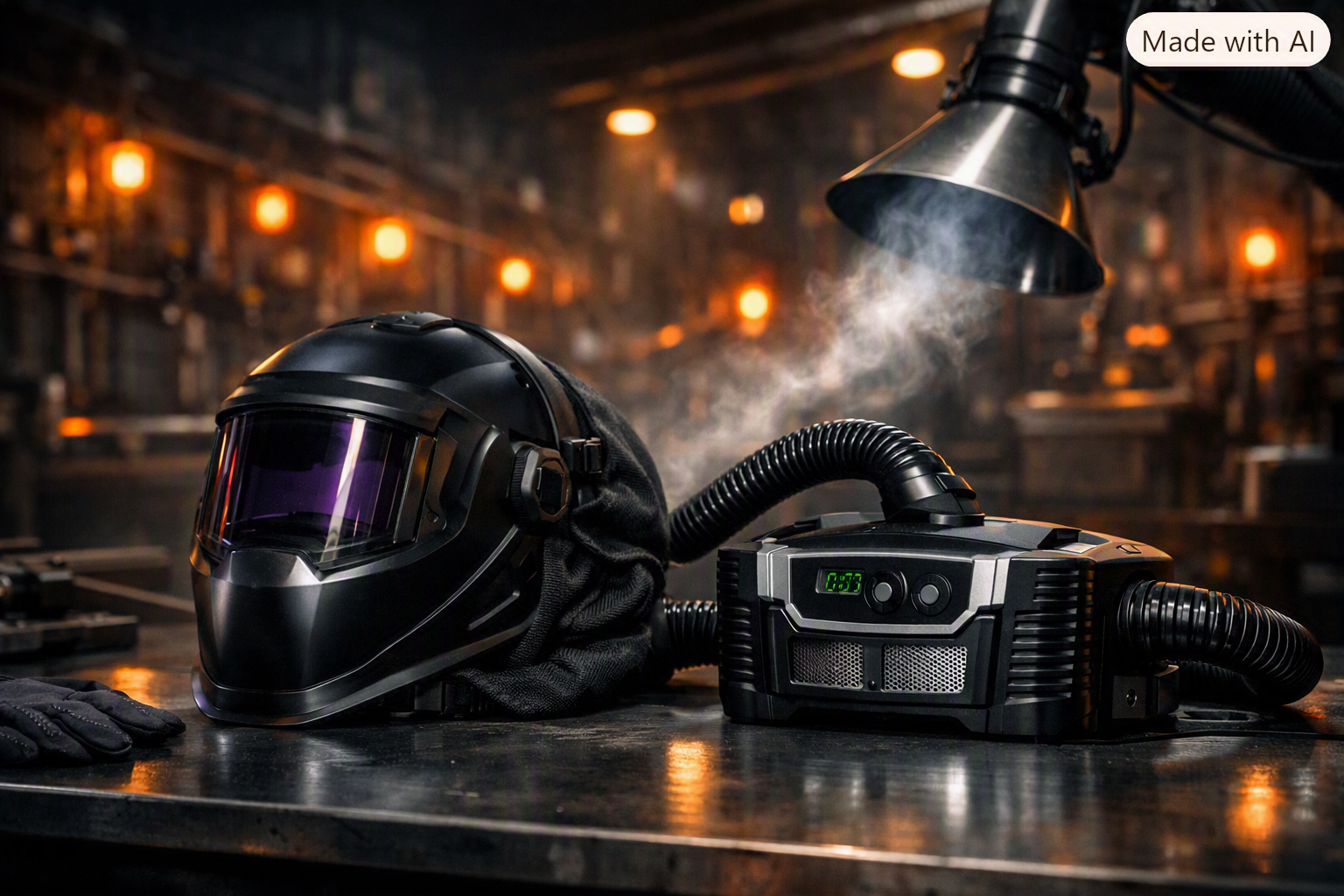 AI generated
When , fine particles and gases are produced — depending on the material and process, a dangerous cocktail. From metal fume fever with galvanized steel to with stainless steel: if you know the hazardous substances, you can protect your lungs properly.
The weld fume rising from the weld bead is not harmless smoke — it's a cocktail of fine metal particles and gases that goes straight into your lungs. The fine particles are the tricky part: the smaller they are, the deeper they penetrate into your airways.
The most famous one is : when you weld parts, zinc evaporates — the reacts in the air to form fine zinc oxide particles. If you inhale them, you'll get flu-like symptoms a few hours later: chills, fever, headache, metallic taste in your mouth. Metal fume fever usually subsides after a day or two, but it's a clear warning sign that your extraction isn't working properly.
Depending on the material, other hazardous substances come into play:
• Stainless steel: When , fumes containing and are produced, including compounds, which are classified as carcinogenic.
• Old coatings: Lead-, zinc-, or cadmium-containing primers and paints evaporate into toxic fumes — remove them before .
• Oils, greases, cleaners: Burn into irritating and sometimes toxic decomposition products.
So the sequence is always the same:
1. Avoid the source: Remove coatings, rust, and grease beforehand — what isn't there can't evaporate.
2. Extraction: Extraction right at the weld (extraction torch, extraction arm) captures the fume where it's created.
3. Ventilation: Ensure air exchange in enclosed spaces.
4. Respiratory protection: Where extraction isn't enough, a suitable respirator (particulate filter, with activated carbon if needed) is required.
The workplace exposure limits are set in the Hazardous Substances Ordinance and the Technical Rules for Hazardous Substances — they're not a recommendation, they're a requirement. If you weld daily, you protect your lungs not sometime, but from the first .