Aluminum & Aluminum Alloys
Lightweight construction with its own welding logic: , , and age hardening
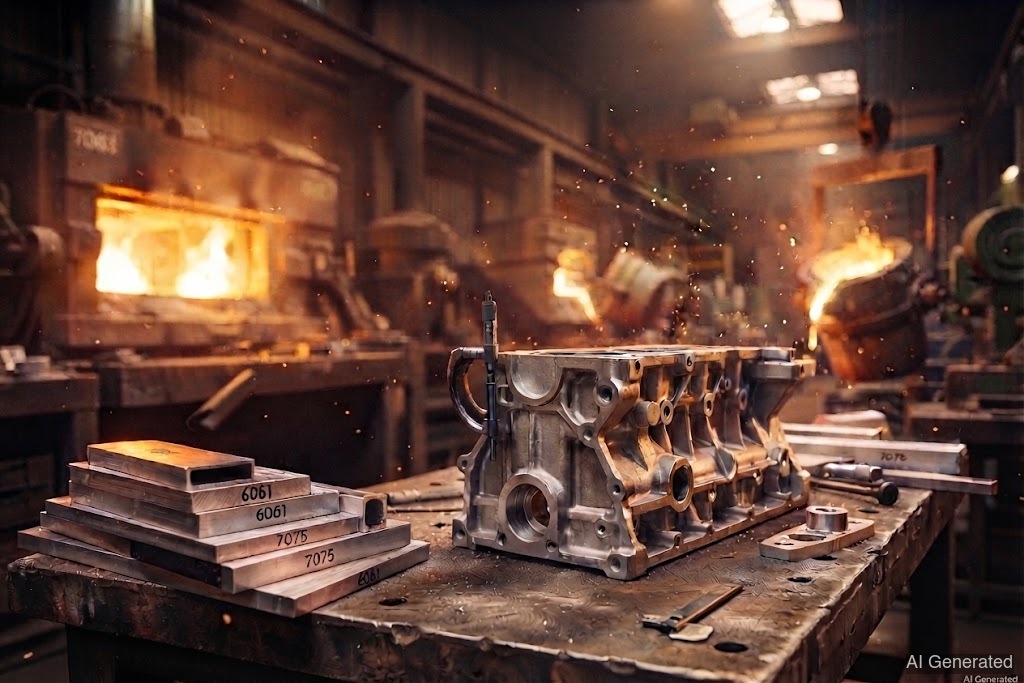 AI generated
Aluminum, with a density of 2.7 g/cm³, is the most important lightweight material. Its natural protects against but places special demands on . What matters are the right alloy family, removing the oxide skin, and the appropriate .
Aluminum weighs only a third of steel – that's exactly what makes it the material for everything that needs to be light and still strong: automotive, aviation, ladders, tanks, facades. But welding aluminum follows its own rules. If you treat it like steel, you're guaranteed to fail.
The first obstacle sits invisibly on the surface: the . Aluminum reacts with air immediately to form aluminum oxide – a ceramic-like skin that melts only at around 2050 °C, while the aluminum underneath is already liquid at 660 °C. If you leave the oxide skin in when , you get hard inclusions in the weld. That's why the rule is: brush the surface thoroughly with an aluminum-stainless steel brush or pickle it beforehand. With , the helps you: the positive half-cycle of the alternating current literally blasts the off.
Then the alloys. You distinguish between , which are rolled, drawn, or forged, and for shape casting. The most important wrought families: AlMg (5xxx) is the all-rounder with the best , AlMgSi (6xxx) is the classic structural material, AlCu (2xxx) and AlZnMgCu (7xxx) are the high-strength aerospace alloys. What matters is whether the alloy is age-hardenable. The 6xxx and 7xxx alloys are strengthened by – during , this strength is partially lost in the , and the material becomes softer there. The describes exactly this artificially aged, fully hardened state.
When , three classic mistakes lurk. First, : aluminum shrinks a lot during solidification, and certain alloys – especially 6xxx and 7xxx – tend to have in the center of the weld. The remedy is the right, silicon-rich . Second, : liquid aluminum absorbs hydrogen, and as it solidifies, form. The cause is almost always moisture or a dirty, oxidized surface. Third, : aluminum expands twice as much as steel, so parts distort noticeably during . Add to that the high thermal conductivity – you need a lot of energy to get the weld area up to temperature at all.
Aluminum is almost always welded with (AC) for thin sheets and with MIG for thicker sections. The is pure argon or an argon-helium mixture. For MIG , because of the soft wire feed, use as short a hose package as possible and a of the matching alloy.