Classic Cars & Restoration
Thin sheet, old cast iron, and the magnesium trap
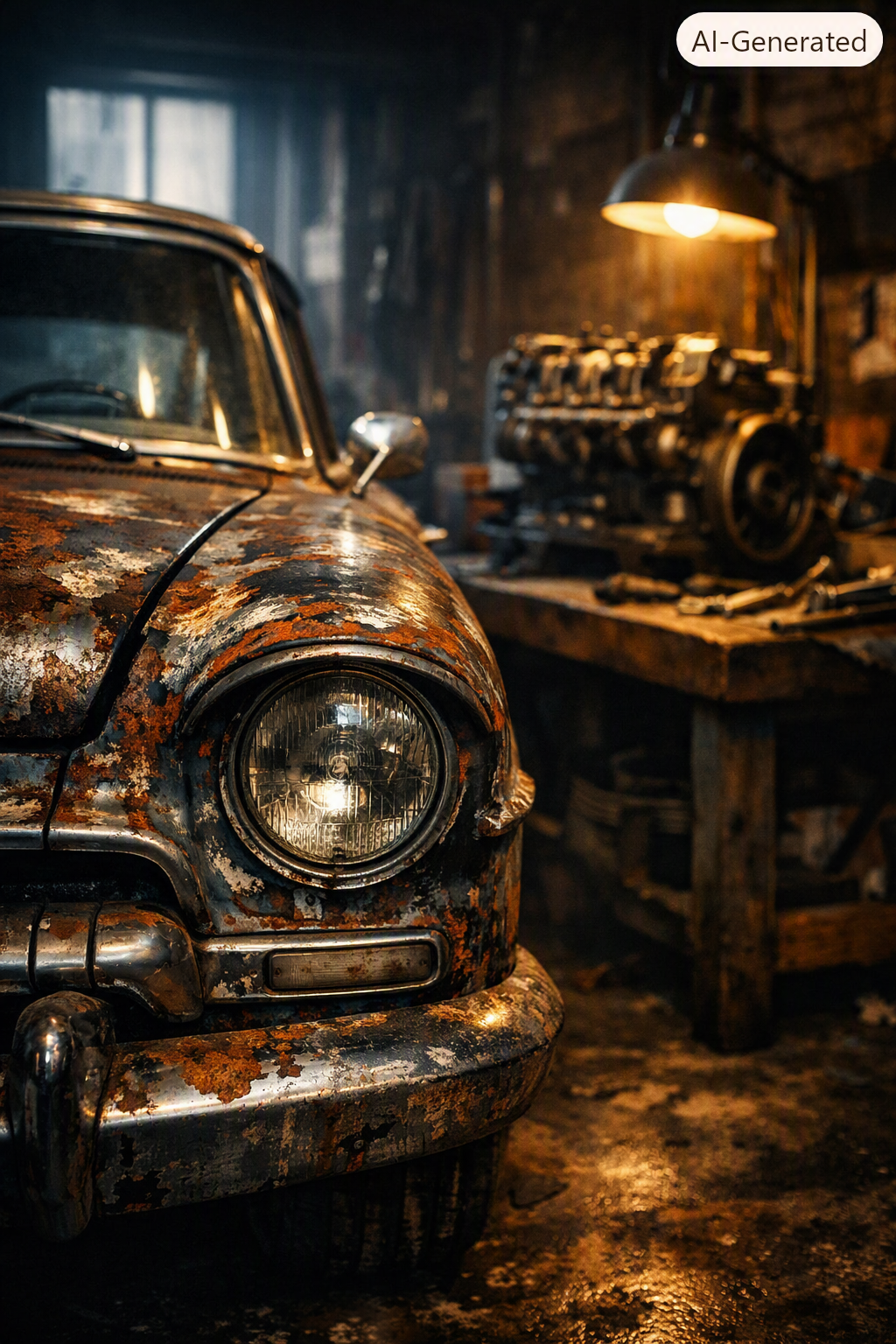 AI generated
Rust buckets, distortion-free thin sheet, old cast iron, and safe magnesium identification via file test: with classic cars, every material is its own chapter. Here's an overview of what you need to watch out for.
When working on classic cars, you're dealing with three worlds at once: thin body sheet metal that distorts immediately when , old that cracks with the wrong filler, and—treacherously—lightweight parts made of that you can hardly tell apart from aluminum as a layman.
The thin sheet is the classic. If you hit it with full heat, after three tacks you'll have a wave in it that you'll never get smooth again. What counts here: little heat, short welds, let it cool down again and again, and keep an eye on . For minimal heat input, you have two friends: the —no process puts so little heat into the sheet—and the sensitive with low current. The does the work; the sheet should rest.
Old cast iron is the second discipline. Old cast iron has a high carbon content and won't do what you want when . Without and without the right, tough filler, it will crack right next to the weld. That's the moment when a classic car repair gets bigger instead of smaller.
And then there's magnesium. It's in old wheels, gearbox housings, and cast covers—and it burns. The trick from aluminum doesn't work here because the part can go up in flames under the torch. So: first identify it safely, then decide.