Precision Steels & Mold Making
Tool, mold, and precision steel — when the surface is everything
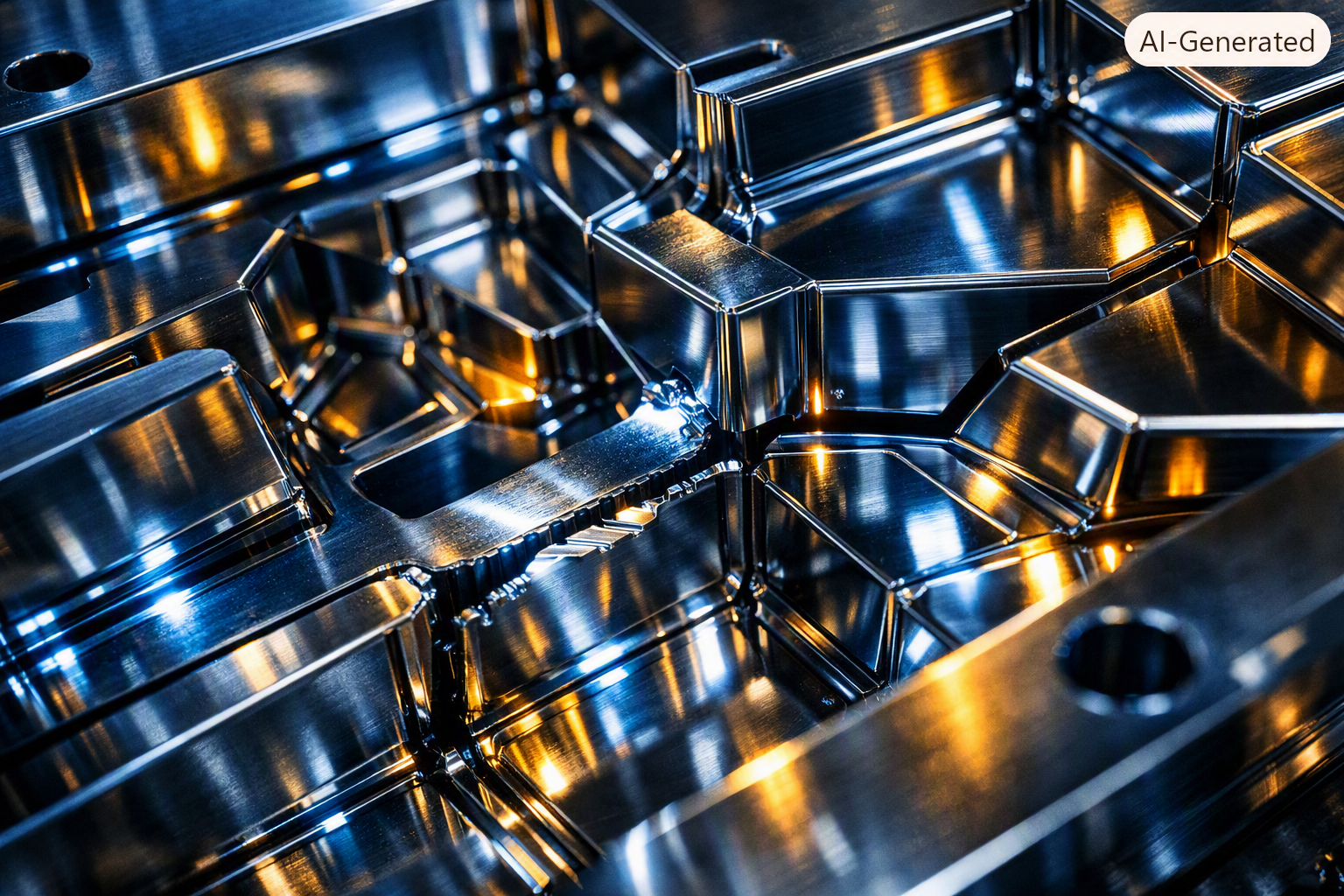 AI generated
Mirror-polished cavities, tight dimensional tolerances, and hard surfaces: precision steels don't forgive mistakes when . Here's your entry point via material and application — plus links to the detailed articles.
Precision steel is not a single material but a whole family. It includes the for cutting and stamping tools, the for and forging dies, and the plastic mold steels such as or . What they have in common: they are heat-treated, hardened to the tenth, and often mirror-polished. That's exactly why every weld bead here is an intervention into the heart of the matter — a mistake is not just "do it again," it costs the mold.
You land here when a tool is broken, an edge is chipped, or a mold needs reworking. The first step is always the same question: What material are you dealing with? That determines how hot you need to , which you use, and whether you need to afterward. The answers are in the detailed articles — here's the guide:
• — 1.2379, 1.2080 & Co.: cutting, stamping, and forming tools. High , can't take much heat.
• — 1.2343 & Co.: when molten aluminum comes into play.
• — 1.2738, 1.2316 & Co.: plastic molds, mirror-polished and dimensionally accurate.
• — when it gets hot AND hard.
• — the whole family at a glance.
One principle runs through all of them: Precision lies in the surface and the structure, not just in the shape. If you weld carelessly, you'll distort the tool and ruin the hardened surface layer. If you preheat properly, use matching filler, and temper correctly, you'll get the repair done without it being visible later.