Spring & Bearing Steels
50CrV4 and 100Cr6: high , tricky
 AI generated
Spring steels and bearing steels are tuned for maximum strength and . Spring steels like 50CrV4 need very high , while bearing steels like 100Cr6 have almost 1% . Both are difficult to weld – destroys their special properties.
Spring steels and bearing steels are the specialists for extreme stress: one flexes millions of times without breaking, the other rolls under heavy load without wearing out. Both achieve their properties through high and targeted heat treatment – and that's exactly what makes them the problem children when it comes to .
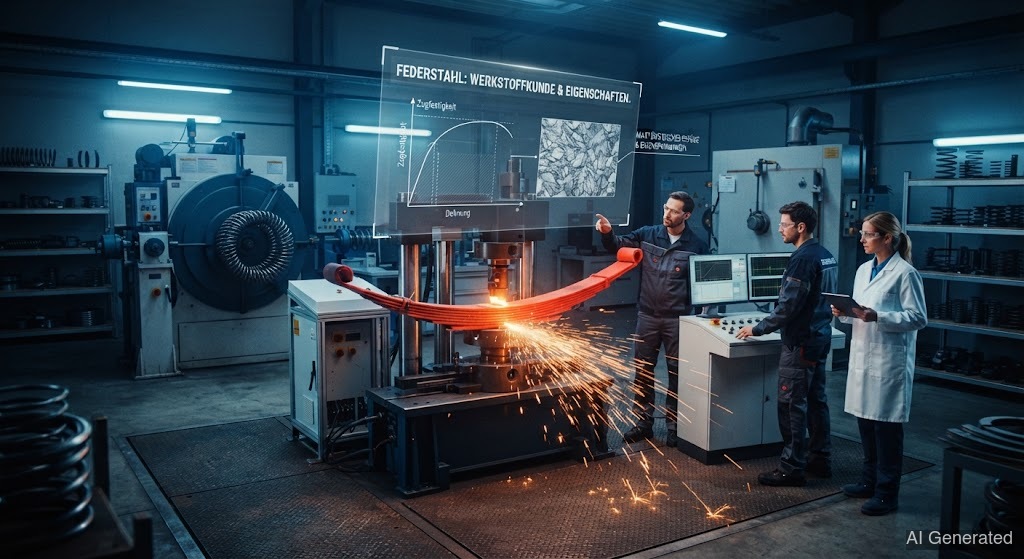
Spring steels like have a medium-high carbon content (around 0.5%) plus silicon, , and . Silicon raises the – a spring needs to be stretched far without permanent deformation. Add to that high : the spring must withstand millions of load cycles. It's tempered to a structure of tempered .
Bearing steels like are among the highest-carbon steels at almost 1% . After , they're extremely hard and – exactly what a ball bearing needs. But that high also makes them extremely , and that makes them dangerous to : the welding heat alone can harden the into brittle .
When it comes to , the same truth applies to both: You really don't weld them. A spring that's been welded at one point will break there – the weld bead acts as a notch, and notches are the death of any spring. Welding a hardened bearing means destroying its and risking cracks. Where there's no other way, only , low-hydrogen , and immediate help – knowing that the original properties at the weld will never be fully achieved again.