The Microstructures of Steels
, , , , and — and what they mean for
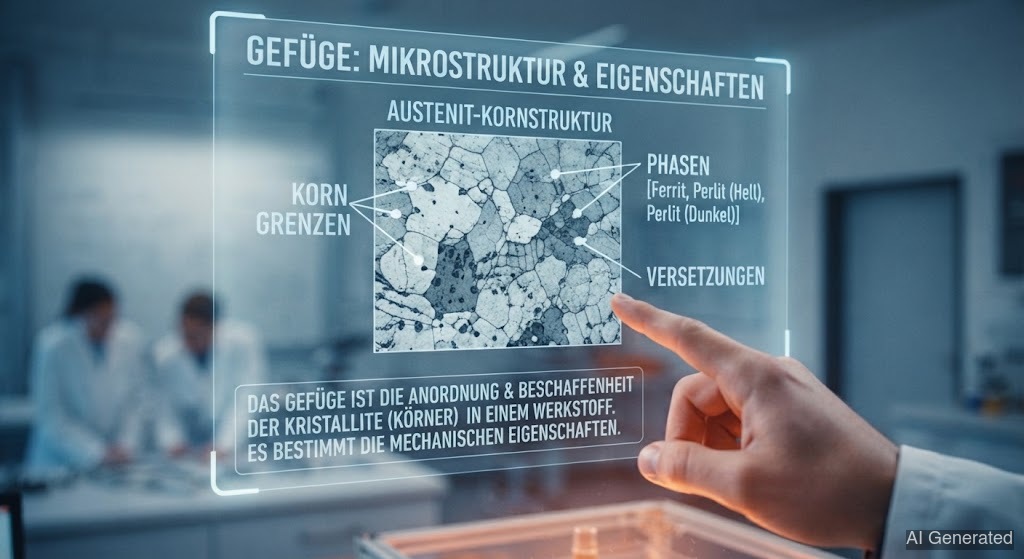 AI generated
Steel is not just steel — what matters is the microstructure. is soft and tough, glass-hard and brittle, the happy medium, rust-free and tough, the compromise between strength and . If you know the five microstructures, you know how any steel behaves when .
The properties of a steel are not in its chemical composition alone, but in its microstructure — that is, in how the atoms are arranged. You need to be able to tell five microstructures apart, because each reacts differently when .
is the base microstructure of mild steel. It is formable, tough, and magnetic, but soft — below 300 MPa. dissolves almost no . In the weld bead and the , coarse-grained is the condition you want when you weld a plain carbon structural steel cleanly.
is the striped mix of and . It forms when cools slowly and makes the steel stronger ( ~300–500 MPa). Almost every plain carbon structural steel is essentially + . The finer the pearlite stripes, the stronger and tougher it is.
is the high-temperature microstructure that stays stable at room temperature only if enough or manganese is present — that's the secret of stainless steels. is tough, non-magnetic, rust-free, and welds beautifully. It doesn't harden by quenching, only by cold working.
is the microstructure you fear when . If cools in a flash, the has no time to precipitate — the lattice collapses forcibly and traps the . The result is glass-hard (up to over 60 HRC) and brittle. is the cause of in the . More and faster cooling = more and harder .
is the compromise. At medium cooling rates, it forms between and : stronger than , tougher than . Many modern fine-grained structural steels form when — that's exactly why they take more without cracking right away.
The art of is controlling the microstructure. The heats everything above the transformation temperature, then the cooling rate determines what comes out: slow = / (soft, tough), medium = (stronger), fast = (hard, brittle). Your control levers are (slows the cooling), heat input, and plate thickness.
With austenitic stainless steels, this hardening doesn't happen — they stay tough. Instead, other problems loom, like , which you control via the ferrite content of the weld (see the filler metal calculator).