Magnesium & Magnesium Alloys
The lightest structural metal – and its fire hazard when
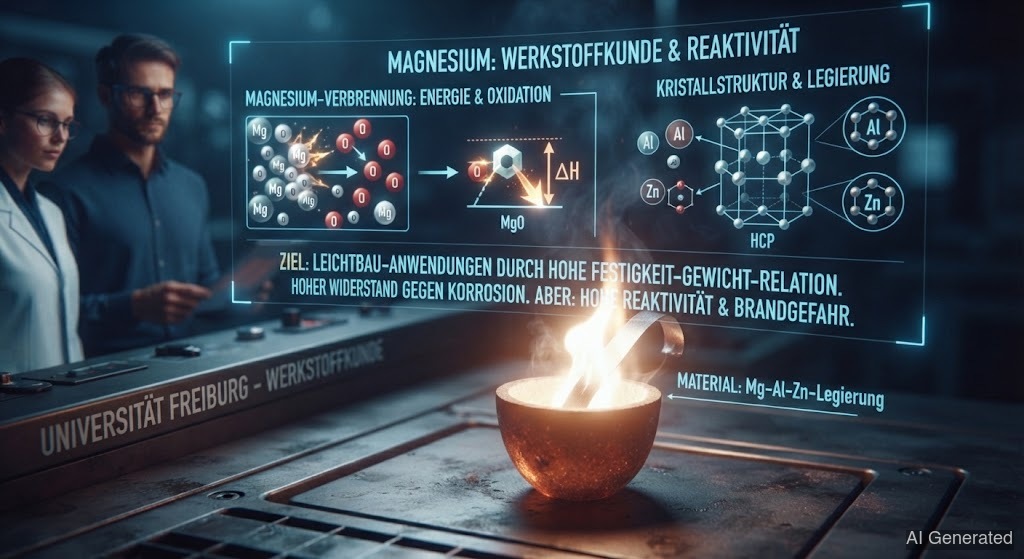 AI generated
At 1.7 g/cm³, magnesium is the lightest structural metal, found in auto parts, electronics housings, and aerospace. Welding it is dangerous: magnesium burns at welding temperatures. Cleanliness, , and respect for fire hazards are key.
Magnesium is the lightweight champion: at 1.7 g/cm³, it's only two-thirds as heavy as aluminum and a quarter of steel. You'll find it in gearboxes, steering wheels, laptop shells, and aircraft parts – everywhere every gram counts. Common alloys are AZ31 (wrought alloy) and AZ91 (cast alloy), where A stands for aluminum and Z for zinc.
But magnesium has a property that overrides everything when : it burns. Magnesium powder and chips ignite at a few hundred degrees, and molten magnesium can catch fire during . The fire is extremely hot and can't be put out with water – water decomposes on burning magnesium and even supplies more oxygen. Only dry powder (Class D extinguisher) or dry sand works. So when welding magnesium: keep the work area free of chips and dust, have a fire extinguisher ready, and never let it contact water.
Technically, magnesium behaves similar to aluminum, only more sensitive.
The file test: Is it really magnesium?
Magnesium and aluminum look confusingly similar – both silvery, both light. Before you put a torch to an unknown part, do the file test: scrape off some shavings with a file and hold a flame to them. Magnesium shavings ignite immediately and burn with a brilliant white flame; aluminum shavings don't. Once you know it's magnesium, follow the fire safety rules strictly – no water, only Class D powder or dry sand. The must be thoroughly removed before , otherwise you'll get inclusions and in the weld. The in TIG also helps break up the oxide skin here. Weld with AC TIG and argon , or MIG for thick sections. Some cast alloys are prone to – the right and clean joint preparation keep that in check.
Like aluminum, magnesium expands a lot and tends to . Tack weld thin sheets, clamp them, and weld with low heat input.