Steel Casting
Cast steel components: their own structure, their own welding behavior
 AI generated
Cast steel is steel that is poured into a mold instead of being rolled – with a coarse cast structure, shrinkage cavities, and . It is readily weldable, but the cast structure requires and care. Typical applications are housings, couplings, and gear parts.
Cast steel is the material between rolled steel and cast iron: it has the composition of steel but is poured into a mold like cast iron. Its designation starts with GS (cast steel) or G (casting), for example GP240GH or G20Mn5. You'll find it in machine housings, couplings, gearboxes, valve bodies, and ship parts – wherever a shape is cast that you can't make from sheet metal.
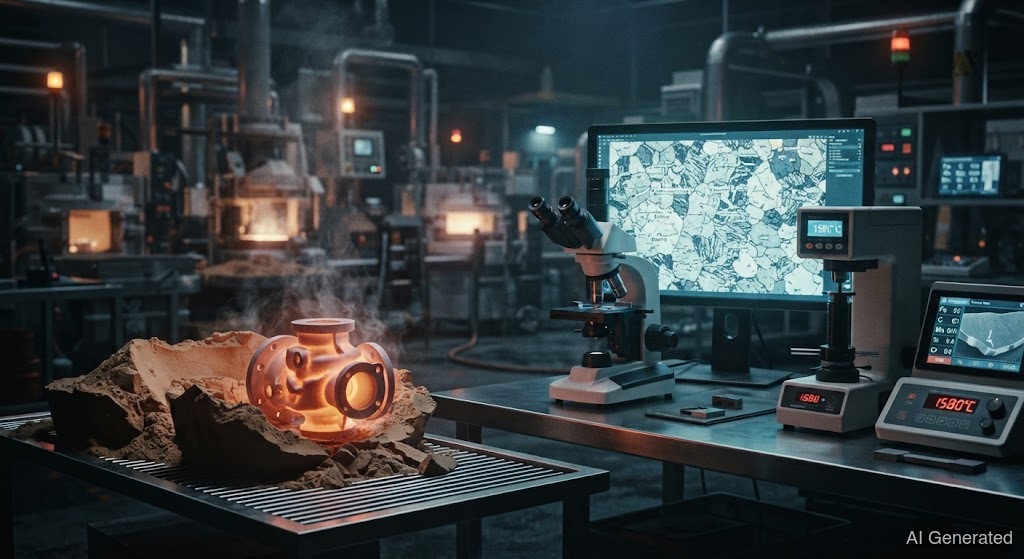
The difference from rolled steel lies in the microstructure. During casting, the steel solidifies slowly and coarsely, with dendritic growth. Unlike rolling, the structure is not refined by mechanical working – cast steel is therefore coarser-grained and slightly less tough than comparable rolled steel. Add to that typical casting defects: shrinkage cavities (Lunker), , and inclusions that can open up during and contaminate the weld bead.
When , cast steel behaves basically like comparable rolled steel – it is significantly more weldable than cast iron because the carbon content is low. But the coarse cast structure and possible defects demand care. The during casting has left , and the risk of is real in some cast alloys.
Practical rules: Before , check the joint area for shrinkage cavities and cracks and dress it out; usually the cast steel (especially for thicker sections and higher carbon content) and control the . After , for large, restrained components, helps to reduce the stresses from casting and welding.