Wear-Resistant & Armor Steels
Armox, Dillidur, and Hadfield: tough in service, tricky when
 AI generated
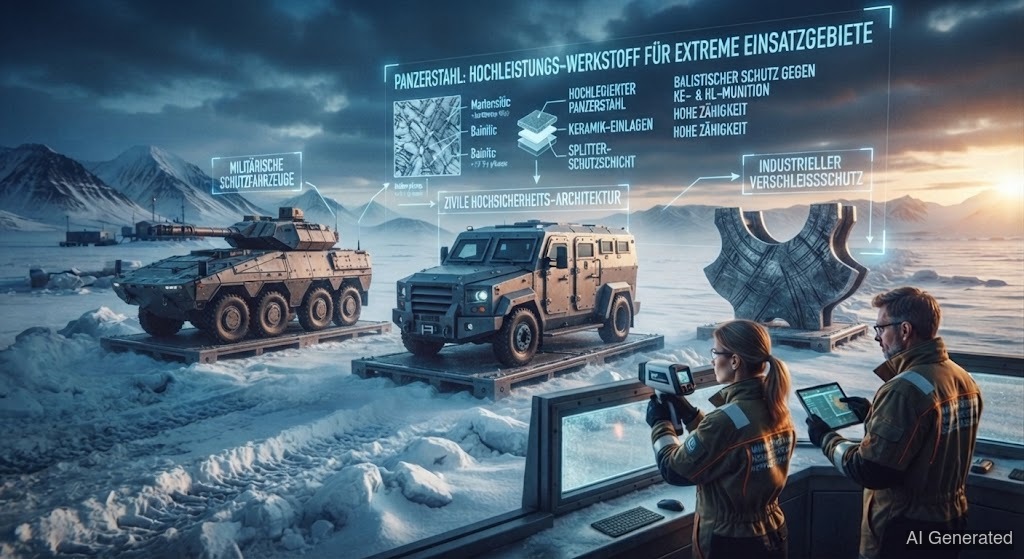
Wear-resistant steels like Dillidur and armor steels like Armox are designed for maximum and . Hadfield manganese steel even work-hardens itself under impact. When , each grade requires its own strict heat management.
These steels have one job: hold up. Wear-resistant steels like Dillidur (400–600 HB) resist abrasion and rock impact in excavators, mills, and chutes. Armor steels like Armox (370–600T) withstand gunfire. And Hadfield manganese steel is in a class of its own: it's tough and soft in the as-delivered state, but work-hardens its surface under impact and pressure – this makes it the material for crusher jaws, railway crossings, and excavator teeth.
The price for this : high alloy content and a high equivalent value. Wear-resistant and armor steels have a CEV well above 0.5 – they immediately form hard, crack-prone in the when . The trick is to control exactly that zone.
Each grade demands its own strategy. Wear-resistant steels (Dillidur) you weld with a soft martensitic, low-alloy filler and controlled preheat – the weld may be softer than the , that absorbs the stresses. Armor steels (Armox) require low heat input, because too much heat destroys their protective performance – the ballistic properties depend on the microstructure. Hadfield manganese steel is the odd one out: you must NOT preheat or weld hot, otherwise carbides precipitate and the steel embrittles. Here the rule is: weld cold, small passes, keep the workpiece cool – if necessary, cool between passes with water.
What they all have in common: the weld is almost always the softest spot in the system. That's intentional – a ductile weld absorbs the instead of cracking.