Creep-Resistant & Pressure Vessel Steels
16Mo3, 13CrMo4-5, and P91: materials for heat and pressure
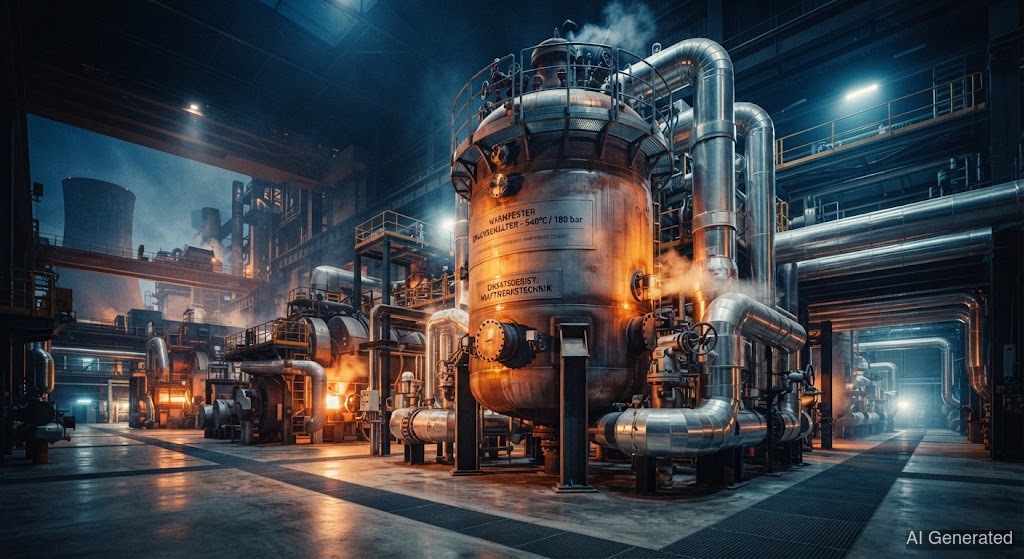 AI generated
Heat-resistant steels maintain their strength at temperatures above 400 °C; pressure vessel steels must stay leak-tight and tough under internal pressure. They are found in power plants, refineries, and boilers. When , they are strictly regulated – , low-hydrogen practices, and post-heating are mandatory.
Heat-resistant steels do their job where ordinary structural steels give up long before: at temperatures from 400 °C to over 600 °C. Steam boilers, superheaters, turbines, and refinery piping demand materials that keep their even under sustained load. The key alloying elements are and : slows down creep – the slow, permanent deformation under load at elevated temperature –, protects against oxidation and .
The classics: (0.3% Mo) for moderate temperatures, for steam lines, and the modern 9% steels / (X10CrMoVNb9-1), which, thanks to and niobium, are still strong at 600 °C. In addition, there are the pressure vessel steels to , which above all must be tough and readily weldable because they are under internal pressure. What they all have in common: they are usually or normalized to combine strength and .
When , caution is the rule. These steels quickly form hard in the – especially the 9% steels are unforgiving. Therefore: strictly (150–300 °C depending on the alloy), minimize hydrogen pickup, and cool down in a controlled manner after . The second enemy is caused by : does not tolerate damp electrodes or dirty joints.
After , follows – almost always mandatory for these steels to relieve residual stresses and reduce the of the . The temperature is high (around 700–760 °C) and must be held precisely.