Die-Casting Mold Steels
Hot work tool steel in the toughest application: liquid metal under pressure
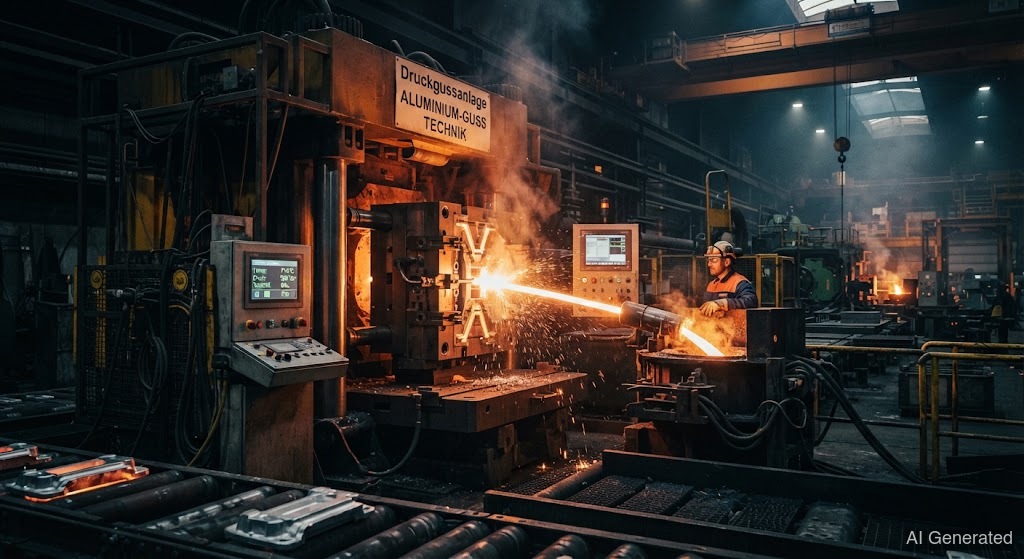 AI generated
Die casting molds experience the most brutal thermal shock in tool making: aluminum over 600 °C under high pressure, then cooling – cycle after cycle. For that, you need hot work tool steel with maximum hot strength. When welding, every detail counts.
Die casting is the toughest application for hot work tool steel. Here, liquid metal – aluminum, zinc, or magnesium – is pressed at high pressure into a steel mold, where it solidifies in fractions of a second. The mold is under stress like no other tool: hot metal, high pressure, rapid cooling – and that thousands of times in a row.
The result of this constant thermal shock is heat checking: fine network cracks on the mold surface, which occur because the surface repeatedly expands and contracts in rhythm with the cycles. Eventually, the material tears. That's why the die casting mold needs hot work tool steel with high hot strength, good hot toughness, and resistance to this cyclic loading.
The standard materials are 1.2343 (X37CrMoV5-1) and 1.2344 (X40CrMoV5-1). Both are CrMoV hot work steels that remain strong even at 600 °C. For the highest demands – large aluminum molds with extreme heat checking – there's 1.2367 (X38CrMoV5-3) with even higher hot strength. 1.2343 is a versatile all-rounder: it's also used in plastic injection molding – but there with completely different requirements for the filler metal.
It's important to distinguish between the two processes: hot chamber die casting pours low-melting alloys like zinc (around 400–450 °C), while cold chamber die casting handles aluminum and magnesium at about 650 °C. The aluminum mold in cold chamber is thermally the toughest case – that's exactly where most heat checking occurs.
When welding a die casting mold, it's always about the same thing: maintaining hot strength. The repair area must become as hot-strength as the base material again, otherwise it will crack again on the next cycle. So: weld hot, use matching filler metal, temper immediately.