Mold Steels for Glass
Glass molds: dimensional stability under over 1000 °C
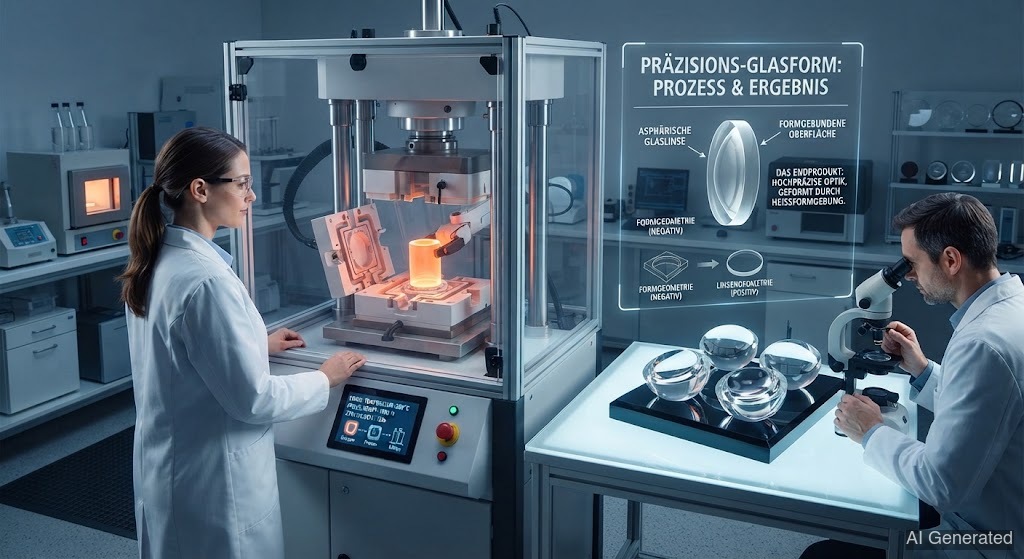 AI generated
Glass molds give liquid glass its shape – from bottles to headlamp lenses. They are subjected to extreme heat and must remain dimensionally stable. Hot-strength steels with high scale resistance are required.
The is the tool of glass forming: liquid glass at over 1000 °C is blown, pressed, or cast into the mold and solidifies there into the finished product. From wine bottles to precision lenses, every glass is made in a steel mold.
The stress is primarily thermal. The mold sees extreme heat and must remain dimensionally stable. Two enemies lurk: and distortion. If the mold surface scales, the glass becomes rough and gets sticking spots. If the mold distorts, dimensions are off – and with glass, every tenth of a millimeter counts.
That's why glass molds need hot-strength steels with high scale resistance. These are grades similar to hot-work tool steels or special alloys that retain their shape and surface even under continuous heat. The mold surface is often additionally coated to prevent the glass from sticking.
When a glass mold, it's about the same as with any hot-work repair: restoring hot strength. The repaired area must stay strong at high temperatures and must not scale – a wrong filler makes the repair a weak point that fails on the next casting cycle.
Typical repair cases are broken mold edges, cracks at transitions, and worn mold cavities. Here, the rule is: weld hot, use a hot-strength filler, temper immediately – and smooth the mold surface after repair so the glass stays clean.