Mold Steels for Rubber & Elastomers
Rubber molds: against abrasive fillers
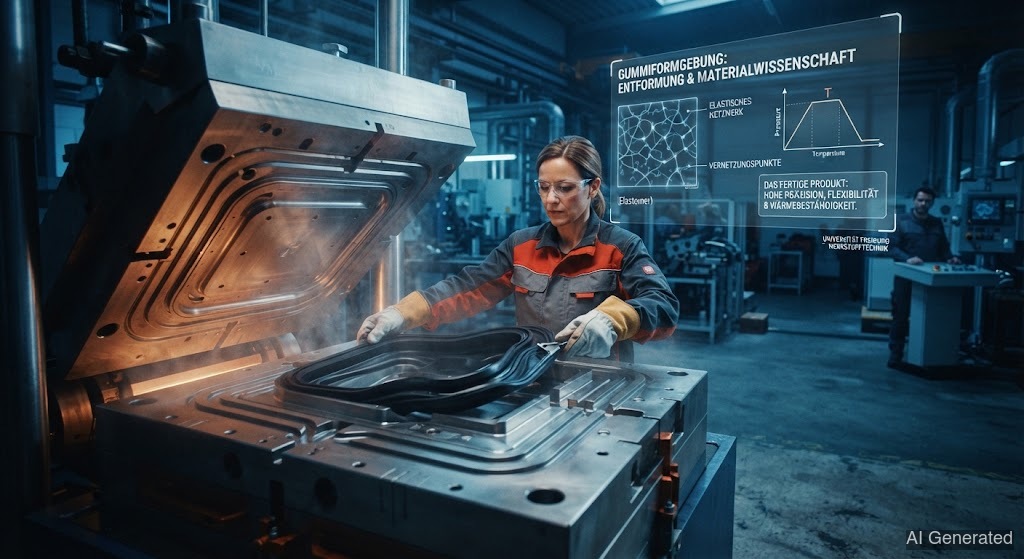 AI generated
Rubber molds process elastomers – often filled with abrasive fillers like carbon black or silicates that wear the mold heavily. Add aggressive release agents. The mold must be wear- and corrosion-resistant.
Rubber molds are the silent specialists of mold making. Here, no metal and no shiny plastic is molded, but elastomer – rubber, silicone, thermoplastic elastomer. That sounds soft, but it's a tough test for the mold.
The reason: rubber compounds are often mixed with abrasive fillers – carbon black, silicates, chalk. During injection and demolding, these fillers act like grinding paste and wear down the mold surface over time. Add aggressive release agents and vulcanization at temperatures around 150–200 °C.
That's why rubber molds need two properties: against abrasive attack and corrosion resistance against release agents. This exact combination is provided by mold steels – (X36CrMo17) and (X40Cr14). For particularly abrasive compounds, nitrided surfaces or hard coatings are added.
When a rubber mold, the same applies as for plastic molds: protect the mold surface and repair in a structure-compatible way. The difference: due to the abrasive load, the of the repaired area matters even more – a filler that is too soft will quickly be eaten away by the filler material.
The typical repair is a broken mold edge or a worn mold cavity area. Here, only a filler that achieves the of the helps – plus careful reworking so the sealing surfaces seal tightly again.