Mold Steels for Ceramics
Ceramic molds: abrasive and at the same time
 AI generated
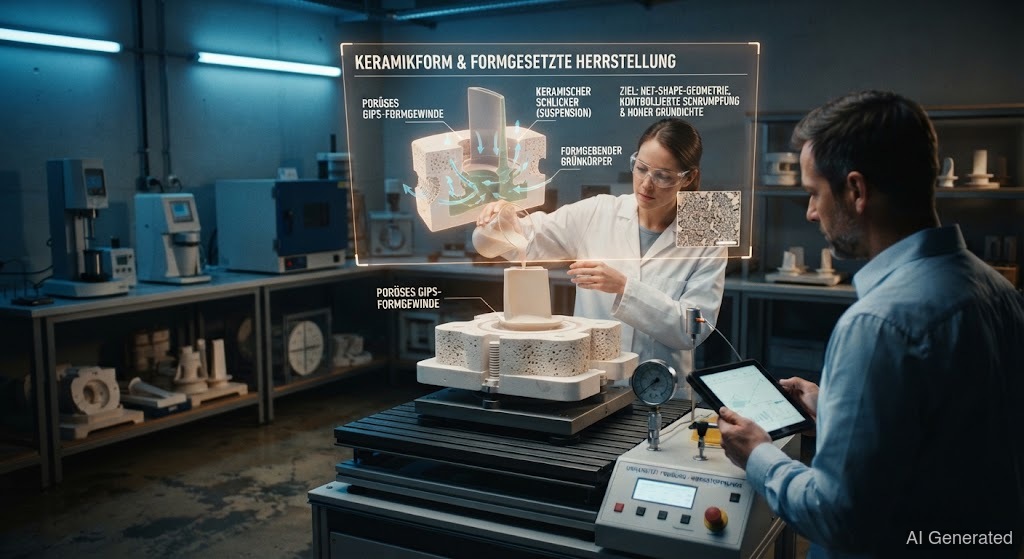
Ceramic molds press moist, highly abrasive masses into bricks, tiles, and sanitary ceramics. The mass is abrasive and at the same time – and steels are required.
A presses or extrudes ceramic masses into bricks, tiles, sanitary ceramics, and technical components. The mass is moist, sticky, and highly abrasive at the same time – a particularly nasty combination for the mold.
As with the , pure prevails: The ceramic mass grinds away the mold surface, especially at edges, nozzles, and mouthpieces. But the moisture brings a second attack: The mass acts on the mold surface. Abrasion and work together here.
Therefore, and steels are required, often combined with hard coatings or inserts at critical points. Bare alone loses too quickly against this double load.
When a ceramic mold, two things matter: and corrosion resistance of the repaired area. A filler that is only hard but not will rust away under the moist mass. A filler that is only but too soft will be rubbed off immediately.
The typical repair cases are worn nozzles, battered mold edges, and worn mouthpieces. Only a filler that meets both requirements helps here – plus reworking and re-hardening of the mold surfaces.