High-Speed Steels (HSS)
Machining: the cutting edge that stays hard even at red heat
 AI generated
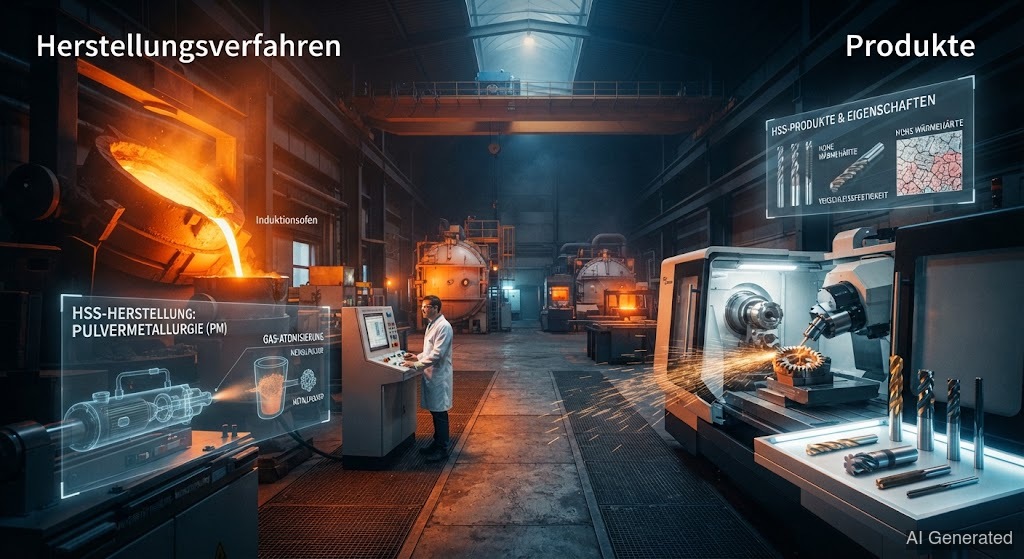
High-speed steels (HSS) are the materials of machining: drill bits, milling cutters, threading tools. They keep their edge even at red heat because they undergo secondary hardening when . When , they are extremely demanding.
– HSS for short – is the material of . Drill bits, milling cutters, taps, broaches: all tools that cut through metal and get hot doing it. That's exactly what HSS is made for.
During machining, friction heat is generated, and the cutting edge can reach several hundred degrees. A regular would temper at this heat and lose its – the cutting edge would dull instantly. HSS does not: it undergoes during . When , fine special carbides precipitate, which even increase the – the steel stays sharp until red heat.
The most important grades: (HS6-5-2C), the standard HSS for drills and milling cutters, (HS6-5-2-5, M35) with cobalt for higher hot hardness, and (HS2-9-1-8, M42) as super-HSS for the toughest machining. The powder metallurgy HSS grades like and technically belong here, but are treated separately due to their special manufacturing process.
When , HSS is the most demanding of all. The high and carbide content makes the HAZ glass-hard and extremely prone to cracking. The iron rule: only weld with very high preheating, use a matching HSS filler metal, and temper several times to take advantage of secondary hardening. Even then, the chances of success are limited – often replacing the tool is the more honest solution.