Injection Mold Steels
Plastic molds: high-gloss polishable, dimensionally accurate,
 AI generated
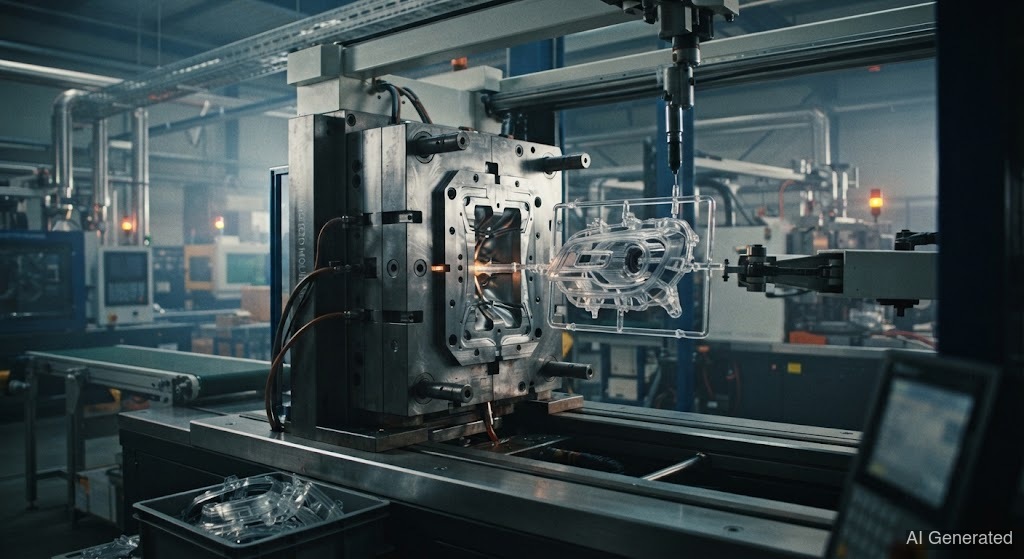
Injection molds shape plastic into precise parts. Thermally less stressed than die-casting molds, but surface finish matters even more: high-gloss polishable, dimensionally accurate, —and with glass-fiber-reinforced plastic, extremely . When , protect the polished surface and keep an eye on the invisible residual magnetism.
shapes plastic: The granulate is melted, injected into the closed , and solidifies there into the finished part. From toothbrush handles to bumpers, the same part is produced cycle after cycle.
The injection mold has different requirements than the die-casting mold. The is much milder—plastic arrives at 200–300 °C, not over 600 °C like aluminum. But surface finish matters even more: the mold is polished to a high gloss so the plastic parts shine cleanly. Add dimensional accuracy, good machinability for the engravings, and—with aggressive plastics—.
The standard materials are pre-hardened mold steels. (40CrMnNiMo8-6-4) is the all-rounder for large molds, (40CrMnMo7) the easily machinable one for standard molds, with sulfur addition for maximum machinability. Where aggressive plastics or food contact are involved, the (X36CrMo17) is used; for the highest gloss polish, (X40Cr14).
And then there is the case that makes the injection mold its own world: the (X37CrMoV5-1). The same steel that withstands liquid aluminum in is also in high demand in —namely when glass-fiber-reinforced, abrasive plastic is processed. The glass fibers act like fine sandpaper and rasp away at the gate edge, edges, and cavities. Here, it's not about but —and thus a completely different filler than in .
When an injection mold, two things matter: protecting the surface and preserving the structure. Spatter and scratches ruin the glossy surface irreparably, so you only weld where you'll machine anyway. For normal repairs, use a structure-matching —at 35–45 HRC, it matches the and polishability of the rest of the mold. With glass-fiber-reinforced plastic, though, this filler won't help: the fibers quickly rasp away the 35–45 HRC surface again. Instead, use a structure-improved filler with higher abrasion resistance and up to 58 HRC —only that will withstand the glass fibers over the long term. Which filler suits your , process, and application is shown by the .
A common repair case is cooling channel leakage: water escapes from the cooling system into the mold. Here, a specific approach helps—from conical drilling to forming the channel to a tough buffer. That's a job for the pros, but exactly why the premium pass is worth it.